UR hosts the International Conference on Trade, Innovation and Commercialization
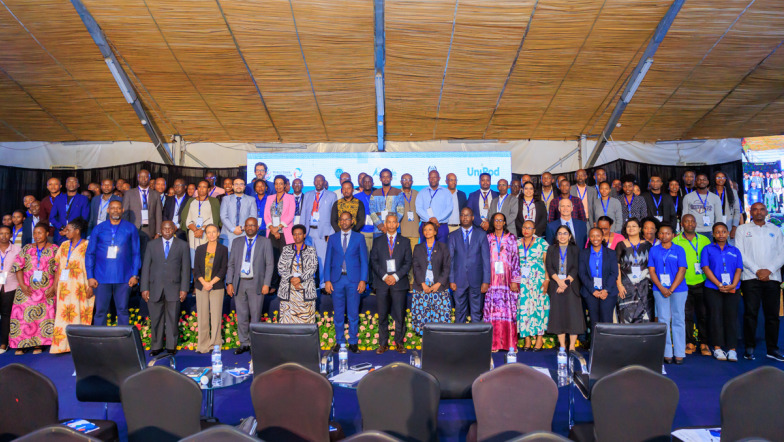
From 30 to 31 October 2025, the University of Rwanda (UR) hosted an international research conference on Trade, Development, Innovation, and Commercialization to facilitate knowledge exchange, networking, and collaboration among academia, industry, and policymakers.
Organized by University of Rwanda’s World Trade Organization (WTO), Rwanda Program in collaboration with AeTrade Group, this conference attracted approximately 200 participants and 50 exhibitors, representing SMEs, student-led innovations, and startups.
Under the theme “Enhancing the effectiveness of partnerships between Universities and Industries” within two days, participants shared experiences and insights on the prospects for Africa’s trade and regional integration, including the African Continental Free Trade Area (AfCFTA) and examined the role of Artificial Intelligence (AI) and Machine Learning (ML) in enhancing customer interactions and driving innovation in universities.
In her remarks, UR DVC for Finance Francoise Kayitare Tengera noted that the conference was timely and relevant. “As global challenges grow more complex ; from economic uncertainty to climate change; no single institution can act alone. Universities are centres of knowledge and discovery, while industries drive application and scale. When these forces unite, true transformation occurs”, she said.
Speaking on behalf of the AeTrade Group , the CEO Mr. Mulualem Syoum noted that Universities play a pivotal role in driving innovation among SMEs by providing access to state-of-the-art facilities and specialized talent, and technical support.
“We believe that transformative and sustainable societal change at a significant and impactful scale, requires collective action, working hand in hand with stakeholders across sectors to co-create solutions that serve Africans”, he said.
“Through structured collaboration models, universities help SMEs overcome their barriers of entry and increase their competitiveness in the regional and global markets”, he added.
During the conference, a parallel exhibition showcased SMEs, student-led innovations (startups), and products tailored to SME market demand. This platform created opportunities for networking and collaboration between university researchers, young innovators, entrepreneurs, policymakers, development partners, and other ecosystem actors.