WTO Chairs Programme holds academic conference in Cameroon
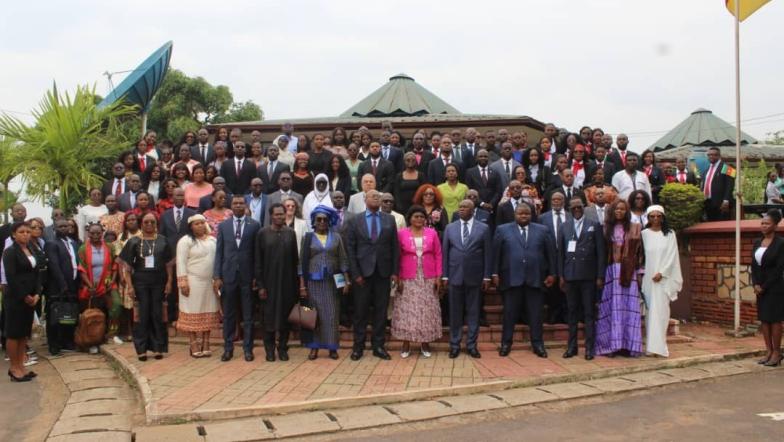
The WTO Chairs Programme (WCP) held an academic conference on 19 and 20 March in Yaoundé, Cameroon, discussing a wide range of issues and challenges in reforming the multilateral trading system from an African perspective. Participants also delved into trade and development issues to explore opportunities and new approaches for the continent and for other developing regions.
The WCP, launched in 2010, supports a network of academic institutions in developing and least developed WTO members and observers in producing trade-related research and developing course material. Through the outreach component of the programme, the chairs' work is shared with policymakers, trade negotiators and other stakeholders.
The two-day event in Yaoundé, held a week before the 14th WTO Ministerial Conference (MC14), was organized by the WCP Chair at the International Relations Institute of Cameroon (IRIC) in collaboration with OBREAL Global Observatory, and under the patronage of the Minister of Trade of Cameroon. It brought together academic chairs from the WCP network for a dialogue with a range of experts and stakeholders.
WTO Deputy Director-General Xiangchen Zhang, in his opening remarks, said that "the proximity of the event to MC14 gives strategic relevance to the discussions and will amplify the reflections and ideas that will emerge in the coming days."
DDG Zhang congratulated Cameroon for its leadership in hosting MC14 and noted that "the research and teaching materials generated by WCP chairs, refined through consistent engagement with policymakers, are extremely important in supporting ministers and government officials in their work, including at WTO ministerial conferences."
The WCP is funded by contributions from France, Austria and the Republic of Korea. The Permanent Representative of France to the WTO, Ms. Emmanuelle Ivanov-Durand, emphasized that the work generated by the chairs is "essential and contributes to international debate through rigorous analysis and the diversity of perspectives provided by researchers and experts".
Ms. Cynthia Zimmermann, Director-General for EU and International Market Strategies at the Federal Ministry for Economy, Energy and Tourism of Austria, said that "initiatives such as this demonstrate how partnerships between academia and policymaking communities can strengthen the foundations of inclusive and sustainable development".
Mr. Seong Deok Yun, Ambassador and Permanent Representative of the Republic of Korea to the UN and other international organizations in Geneva, said that "Korea will continue to support initiatives strengthening research dialogue and capacity building in international trade".
The Secretary General of the Ministry of Trade of Cameroon, Ms. Brusil Miranda Metou, speaking on behalf of the Minister of Trade, emphasized the continued relevance of the WTO to the global economy and the critical importance of the topics to be addressed at MC14 for Africa and other developing regions. She welcomed academic contributions to ongoing reflections on the future of the multilateral trading system.
Discussions on the first day of the conference focused on trade-related issues in the African context. Participants addressed African perspectives on trade and development, regional integration in Africa, and priorities and challenges in reforming the multilateral trading system to benefit Africa.
The emphasis of the second day of the conference was on revisiting the foundations of the multilateral trading system from a South-South-North perspective. Participants explored the history and fundamentals of trade and development, as well as current issues. They discussed international economic relations and progress in development-oriented aspects of the multilateral trading system.
Some of the specific topics covered over the two days of the conference included digital trade, trade in services, global and regional value chains, special and differential treatment, trade and environment, and agriculture and food security.


